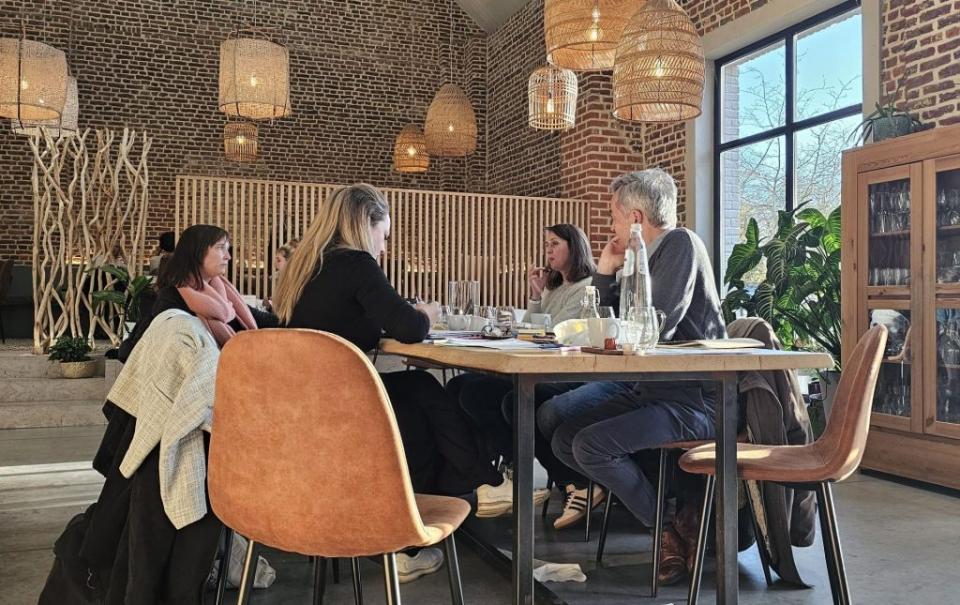
Through awareness-raising, training and networking, the Maison du Repreneuriat supports those who wish to give a new life to an existing business.
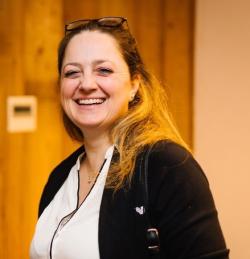
Corine Luyckx, Head of the Maison du Repreneuriat,
shares insights into the mechanisms of business succession.

Why is business succession such an important issue in Belgium today?
Business succession is a major economic reality. Every year, thousands of Belgian companies risk disappearing for lack of successors. Yet transmission is a natural part of a company’s life cycle. A business is created, it grows, it prospers, and eventually there comes a moment when it must pass into new hands.
We are currently facing a significant wave of business transfers, largely due to the retirement of the baby-boomer generation. Many founders reach this stage without having truly anticipated it. However, a successful transfer requires preparation in advance—ideally when the owner is still fully able to do so, both personally and structurally. Failing to prepare can lead to rushed decisions, rarely taken under the best conditions.
What are the main types of business transfers you observe today?
Retirement remains a major reason, but it is no longer the only scenario. We are seeing more and more businesses being transferred after only a few years of existence. Some entrepreneurs realise that what they enjoy most is launching a project, not necessarily developing it over the long term.
Conversely, many people want to become entrepreneurs without going through the start-up phase. Taking over an existing company allows them to move forward more quickly, with an already established structure. Among business buyers, we notably observe a growing number of experienced managers and employees who are seeking meaning and personal fulfilment, and who view entrepreneurship through the lens of business acquisition.
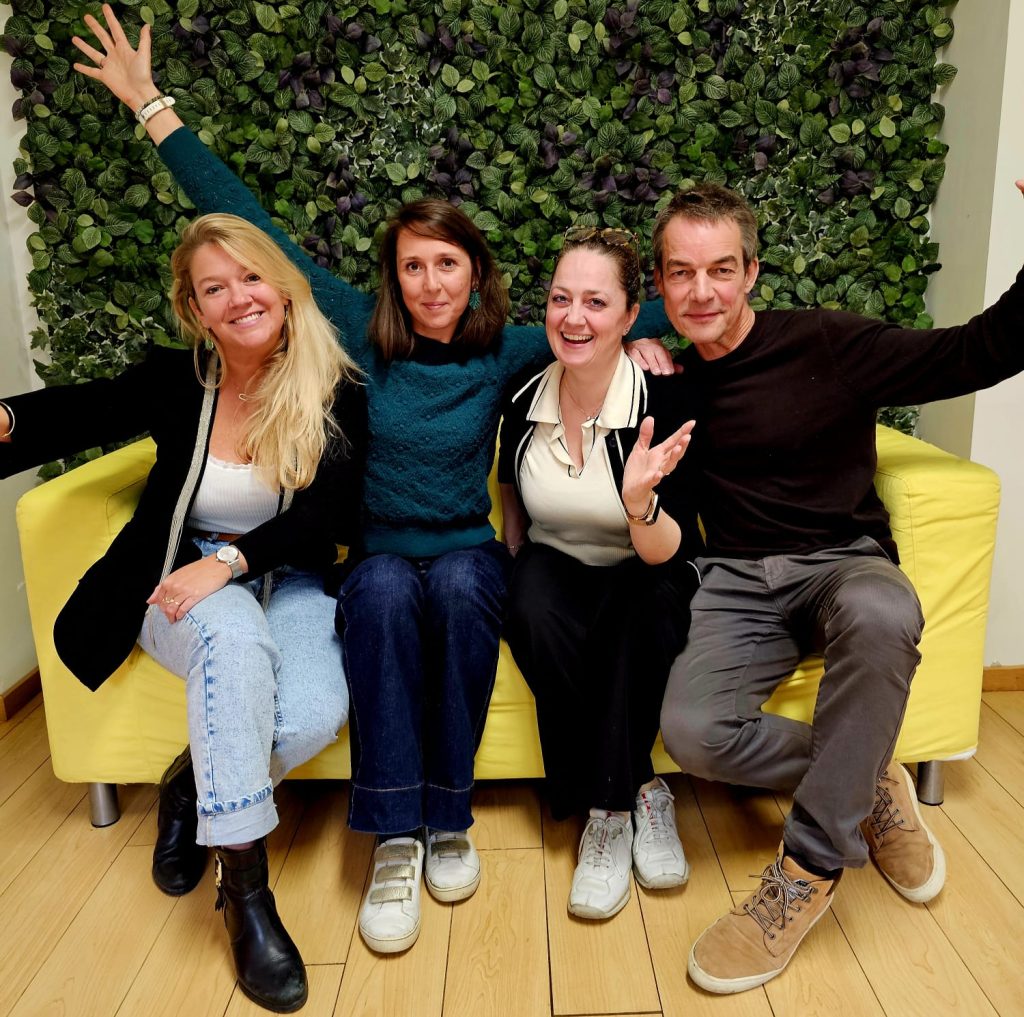
Quel est le rôle de la Maison du Repreneuriat dans ce contexte ?
Notre mission est double. D’abord, nous sensibilisons à la reprise d’entreprise comme une véritable alternative à la création. Quand on parle d’entrepreneuriat, on pense spontanément à créer son entreprise, alors que la reprise est une voie tout aussi pertinente et souvent plus sécurisante.
Ensuite, nous accompagnons la préparation à la transmission par la formation. Ce processus est souvent perçu comme complexe, mais en réalité il est surtout structuré. Il repose sur des étapes clés, un vocabulaire spécifique et des enjeux bien identifiés. Lorsqu’on est formé et accompagné, ces étapes deviennent beaucoup plus claires et fluides.
You have developed a specific training programme, the Boost Camp.
What does it involve?
The Boost Camp is an immersive training programme we designed to allow future business buyers and sellers to quickly and concretely immerse themselves in their project. It takes place over two weekends and two evening sessions, spread across a three-month period.
The objective is to provide a comprehensive overview of the business transfer or acquisition process, to understand its mechanisms, and to acquire the tools needed to move forward in an informed way. Taking part in this programme allows participants to decide, with full awareness, whether they wish to pursue the project—or not.
Everything you need to know about the MDR Boost Camp
At the Maison du Repreneuriat, you use the term “transmitters” rather than “sellers.” Why this choice?
The choice of words is not insignificant. We prefer to speak of transmitters because the term is more positive. To transmit means to pass on, to ensure continuity, whereas “to sell” can give the impression of letting go or even losing something.
A transmitter is often a founder who has invested a great deal of time, energy and emotion into their company. The human dimension is central in a business transfer. Very often, even before the question of financial valuation arises, the primary wish is to entrust the company to someone who will take care of it and help it evolve.
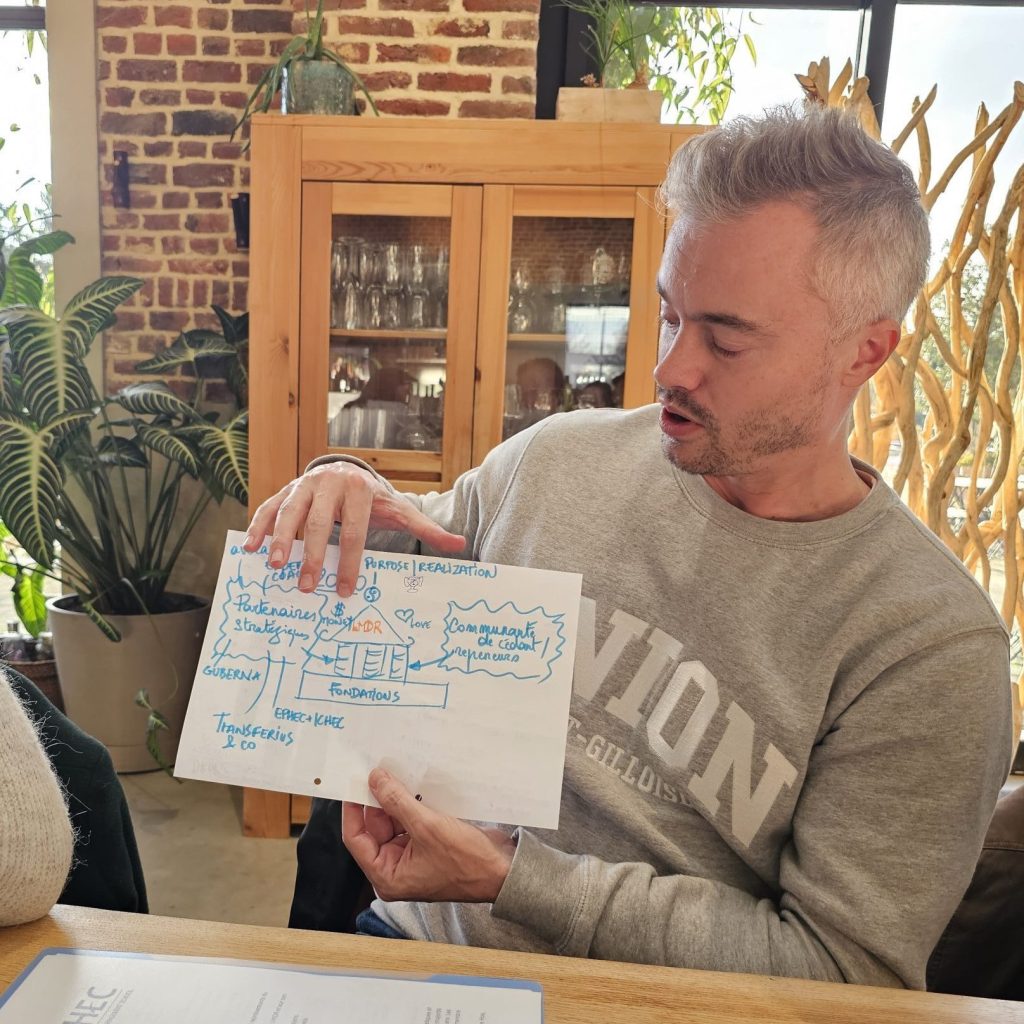
What advice would you give to people who are considering passing on their business?
The main advice is to prepare both mentally and structurally. Business transfer is a process that takes time. It is not limited to a financial transaction; it also touches on the company’s identity, history and values.
Anticipating this step helps avoid decisions taken in urgency and allows it to be approached with greater peace of mind. Being well supported is also essential to structure the process and avoid facing complex decisions alone.
And on the side of business buyers, is there a typical profile?
No, there is no typical profile, and that is precisely what makes business acquisition so rich. We train young graduates as well as senior executives undergoing career transitions, not to mention serial buyers.
However, women remain underrepresented, a phenomenon that is also observed in business creation. This is a reality that concerns us and to which we remain attentive at the Maison du Repreneuriat.
What would be your main advice for prospective business buyers
I would say that it is essential to take the time to build your project. The first question to ask is about meaning: why take over a business? What does it represent in your life path?
It is also important to prepare a solid buyer’s file: background, skills, aspirations, search criteria, available equity, and so on. This preparation reassures transmitters and demonstrates the seriousness of the approach. Taking over a business is not something done on impulse; it is very often a true life project.
How do you see business succession evolving in the coming years?
The trend can only intensify. The number of businesses to be transferred increases every year, while business creation is experiencing a certain slowdown. Business acquisition is gaining visibility and legitimacy.
We also talk about it much more openly today. In fact, I always encourage prospective buyers to share their project with people around them. Word of mouth plays a key role and often leads to unexpected encounters that can give rise to successful business transfers.